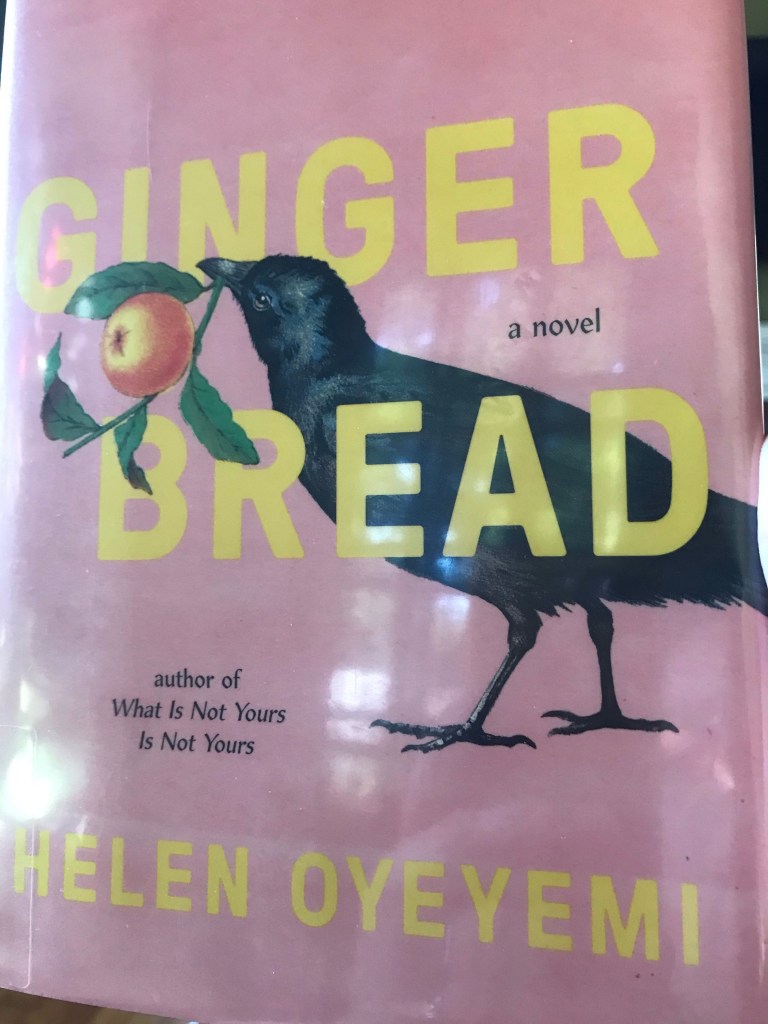
Harriet Lee’s gingerbread recipe has been passed down through generations. You can taste it as Helen Oyeyemi describes it in her novel Gingerbread. The gingerbread feels real and tangible.
But is Harriet Lee real? It is difficult to find evidence of her realness in her interactions with the world around her. A friend who she has lunch with everyday has no idea who Harriet is when she receives a phone call from her. A tin of gingerbread that she tries to give to another parent at her daughter’s school somehow ends up on the floor. Even Druhástrana, the country from which the Lee family hails, has only a dubious existence; nobody can agree whether or not it is real and it does not even have a Wikipedia page.
When Harriet’s daughter, Perdita, comes to harm in an attempt to visit the country of her mother’s birth, Harriet agrees to tell her everything if Perdita will tell her about her journey. We sit with Perdita and her dolls while Harriet tells us about how she and her mother, Margot, left the terrible and wondrous country of Druhástrana and her family’s connection with the Kercheval family.
Each sentence is like another puzzle piece. Will we get enough pieces to solve the mystery? And what is the mystery?
This delightful book will definitely make you crave gingerbread, so I recommend reading it at a time of year when that substance is abundant.
Hey, do you want to read a review of a book that’s out of print and probably not available at your local public library? Sure you do!
I should probably tell you that this is more of a love letter than a book review. There will probably also be a lot of backstory before we get there, just like in a cooking blog. Since we’re here, let me tell you about the marshmallow salad that my mom used to make at Easter.
JOKES ASIDE, “Stonewords” by Pam Conrad was one of my favourite books in my childhood. It was one that I read over and over again and I recently found an excuse to pass it on to my ten-year-old son.
My son, like most kids his age, is super duper into comic books. I haven’t made a fuss over that, because as long as he’s reading, then who cares. His teacher this year, however, wants the kids to have a novel at school for reading time; graphic novels don’t count. I can understand her point of view. There are lots of excellent books for kids out there. And this is a great opportunity to shove some of them into my son’s novel-free hands.
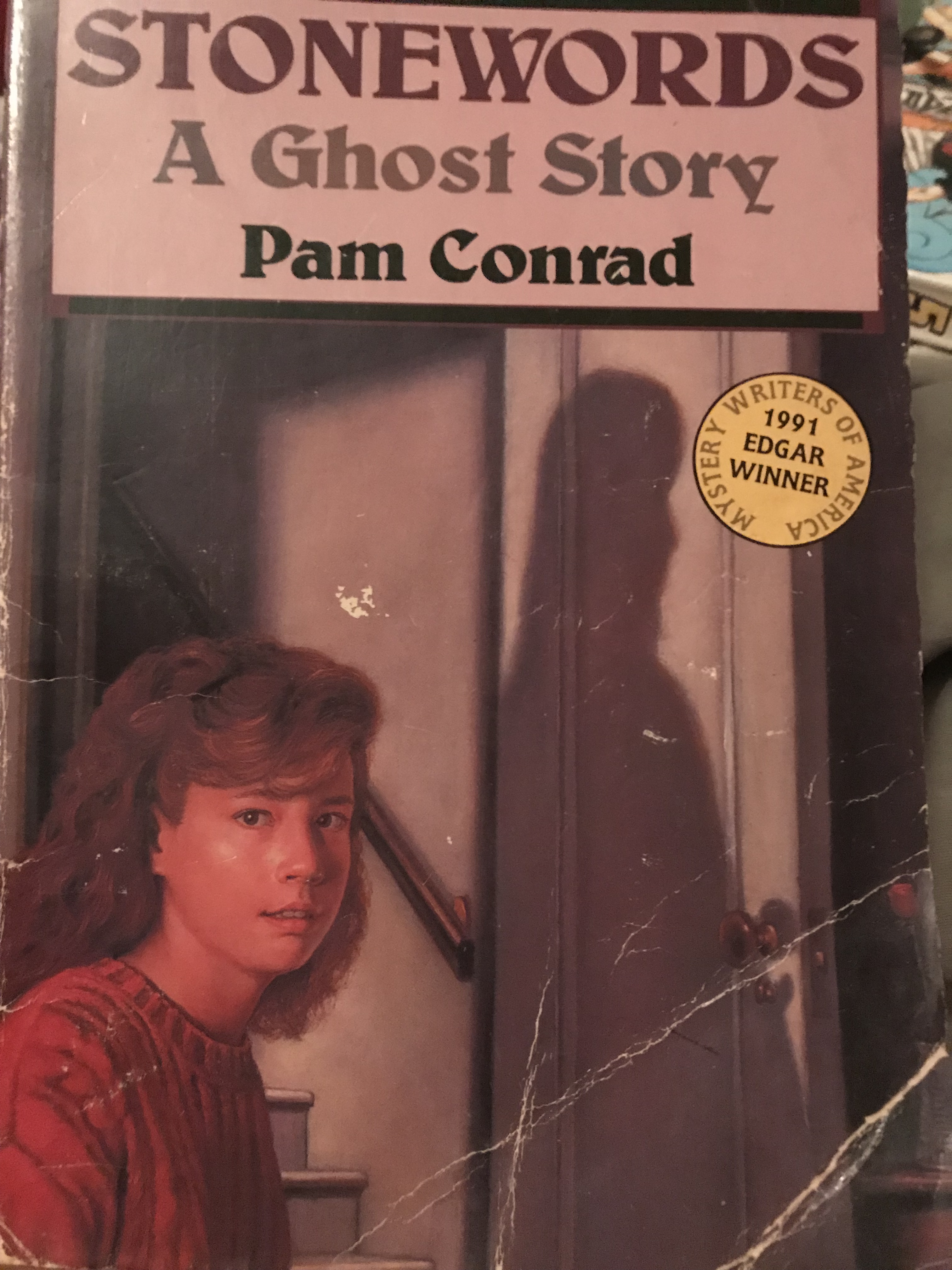
When I showed him “Stonewords,” he was not interested. This book is a perfect example of why you shouldn’t judge a book by its cover.
What do you mean? This cover is flashy, beautiful, AND not in the least outdated!
I mean, give the book a freaking break, it was published in 1990.
After he went to bed, I picked the book up again, sat down, and accidentally read the whole thing.
It stands up.
When I made a post on Facebook asking if anyone remembered it, nobody did. Aww, poor little overlooked book. 😦
Time is running out for Zoe’s best friend, who is a ghost! Zoe is the only one who can help her, but to do so, she must travel back one hundred years in time and somehow alter the past.
I mean, I guess that’s what it’s about, but no wonder nobody’s fucking reading it. This book is a goddamn work of art, not to mention an award winner, and that’s the description they came up with?
This book is different from the books that are being published for kids now. Here are the first two lines:
It seems I had always woken up in the morning with leaves and bits of grass in my toes and under my sheets as if I’d been a ghost wandering the countryside at night. But maybe not.
Kids’ books these days all seem to have the same tone. They’re jokey, they’re light, they are “Captain Underpants” and “Diary of a Wimpy Kid.” Look, there’s nothing wrong with that. These books are getting kids to read, including some who would otherwise not be reading. After years of being exposed to this popular type of voice, however, coming across Conrad’s dreamy and poetic prose gave me a pleasant little shock. I took a moment to adjust before I melted into her words and got lost in the story again.
Four-year-old Zoe, after being left by her mother to be raised by her grandparents, makes friends with an older child named Zoe Louise. They have a complicated friendship; Zoe Louise can be overbearing, and as Zoe grows and Zoe Louise does not, it becomes apparent that Zoe’s mysterious friend wants something from her. Zoe Louise’s behaviour becomes more erratic and sinister as Zoe struggles to overcome her growing fear of her friend to save her.
Do not make the mistake of assuming that this book is too sophisticated for your children. Despite the similes and the metaphors, the language is accessible. My son did decide to take the book to school after I talked it up to him. He is more than halfway through, able to follow the story, AND AND AND he is enjoying it.
Thank you, Ms. S., for insisting on novels for reading time. I can’t wait to introduce my kid to more of my favourites.
If I’m wrong about books these days and youdo know of specific children’s books that are similar to “Stonewords” in tone or style, let me know. I’d like to check them out!
 Raccoon Brontosaurus